As End Overdose exponentially evolves, we continue to seek out guidance from friends across industries and in their areas of expertise. Their perspectives are essential to our growth, whether it’s enhancing the medical intricacies of our online trainings, the impact of our awareness campaigns in entertainment, or our broader outreach efforts nationwide.
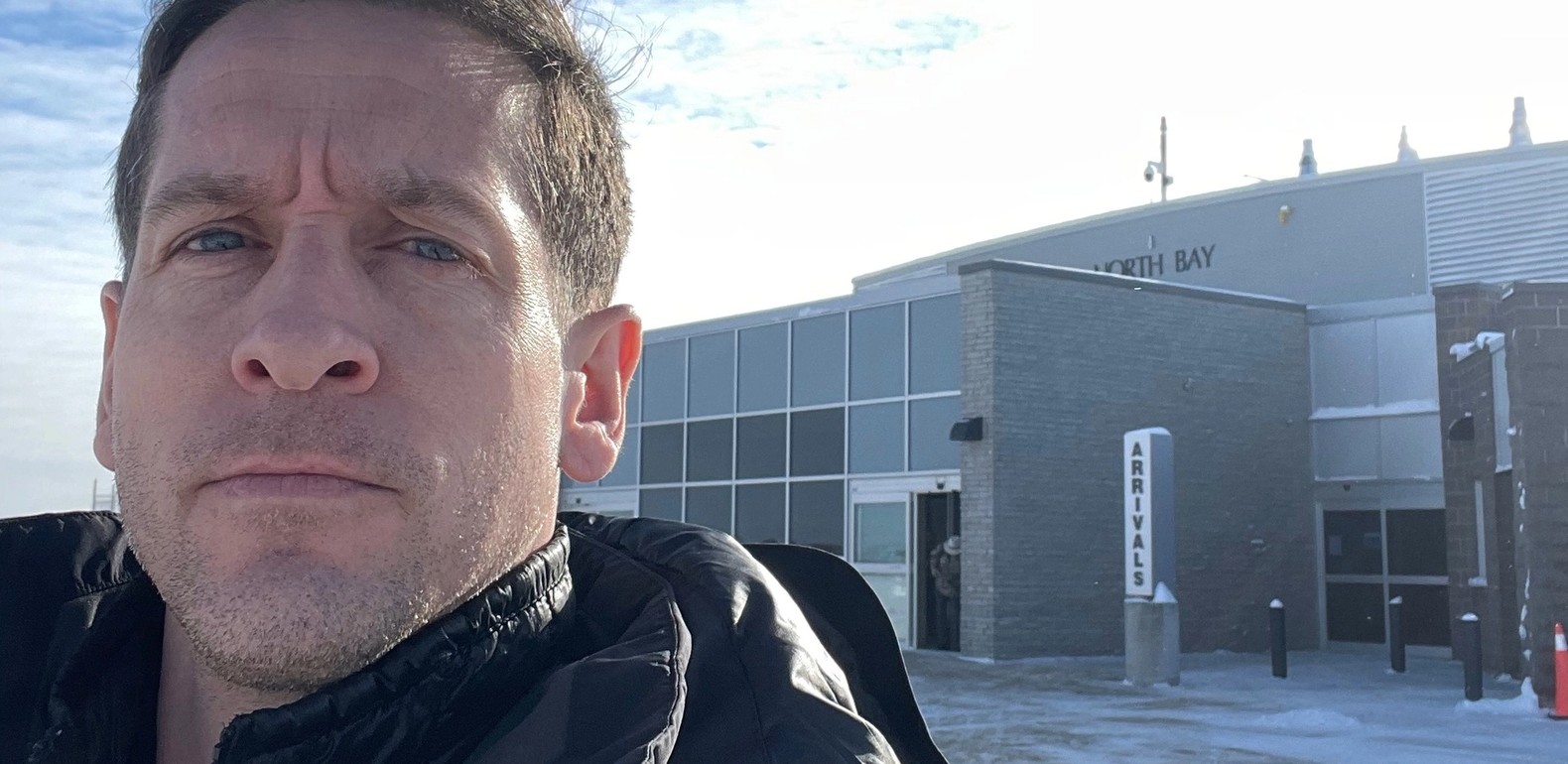
Thus, we’re excited to welcome Jim Crotty as our Drug Policy Advisor!
Jim is a subject matter expert and global thought leader in drug policy and transnational organized crime. Jim spent over 12 years with the U.S. Drug Enforcement Administration (DEA), serving in strategic, tactical, and operational positions domestically and overseas. In his final assignment with DEA, Jim served as the Deputy Chief of Staff and Executive Assistant to the Administrator.
Jim is currently a Law Enforcement Outreach Manager at Meta Platforms, Inc., where he is responsible for developing and maintaining strategic relationships with law enforcement and other government agencies to help combat criminal activity online and in the real world. Jim joined Meta after 1.5 years at the Metropolitan Police Department in Washington, DC, where he led the Investigative Support Section, a real-time intelligence center that prevents and responds to major crimes taking place in the District of Columbia. Jim joined MPD in March 2023 after two years at The Cohen Group, a strategic advisory firm founded and led by former Secretary of Defense William Cohen. While at The Cohen Group, Jim led multiple client teams across the defense, cybersecurity, healthcare, energy, and national security sectors.
In addition to End Overdose, Jim currently serves on the Advisory Board of United Against Fentanyl, a nonpartisan nonprofit focused on ending the illicit drug criss. Jim is a Senior Non-Resident Fellow at the University of South Florida’s Global National Security Institute (GNSI) and the Center for Advanced Defense Studies (C4ADS), and an active member of the Global Initiative Against Transnational Organized Crime (GI-TOC) Network of Experts. He holds a JD from the University of Alabama School of Law, MA in Political Science from Boston College, and BA in Political Science from Auburn University, summa cum laude.
In honor of Jim joining the team, we spoke with him about his accomplishments made via collaborations, his vision for overdose prevention and response throughout the country, and much more!
What’s one key lesson you’ve learned throughout your career that you’d like to share?
Just one?? It’s difficult to narrow it down to just one, so I’ll see if I can weave a few different lessons into a single response. One of the key pieces of advice I learned early on, even before I started my professional career, was to “find what drives you,” the idea being that you will work harder and be much happier when you pursue something you’re passionate about. Of course, there will be times you have to do things you aren’t passionate about – and in those times it’s important to do your very best. People notice and that’s often what leads to new, more exciting opportunities. And while you shouldn’t blindly accept every opportunity that comes along, I suggest keeping an open mind and saying “yes” to new experiences whenever you can. I cheated a little, but I think there’s a through line with those lessons.
You’ve had an extensive journey in drug policy, law enforcement, and teaching as a professor. What are a few accomplishments you’re most proud of?
I’ve had a really rewarding career so far and still have a long way to go, but I’m grateful for all the experiences I’ve had across government, industry, and academia. I’ve taken credit for a lot of accomplishments, but none have been individual efforts. One of the things I learned from my first supervisor at DEA (shout out Elizabeth!) is that whenever you celebrate successes it’s “we,” and whenever you’re learning from mistakes it’s “me.” That’s stuck with me over the years and the truth is any good things I may have done is the result of a lot of help along the way.
What inspired you to join End Overdose’s Advisory Board?
In the first place, it’s a mission I care very deeply about, and I’m always looking for additional ways to contribute. I’ve been following End Overdose for a long time and have watched it grow into a leading voice in drug prevention, awareness, and overdose prevention, especially among young people. That makes me sound old – and I am, relative to End Overdose’s key demographic – but as I learned from Ed Ternan at Song for Charlie, it’s not always the message, but also who delivers it. End Overdose has the expertise and the credibility to reach those in a position to make the biggest difference – young people, or youths, the next generation, etc. I’m humbled and honored to be asked.
What do you hope to see for the future of overdose prevention and response throughout the country?
How about more of it? It’s taken too long, but we’ve learned a lot of lessons from the opioid crisis. Chief among them is that we have tools and strategies that work. Demand reduction works. Supply reduction works. Overdose prevention works. Treatment and recovery work. But we need more of them – all of them – working in tandem to continue to drive down substance use and overdose deaths in the U.S. and around the world. The rate of overdose deaths continues to decline; now is the time to double down on all of the above.
Is there anything else you'd like to add?
Don’t underestimate the power of nonprofits and civil society organizations like End Overdose. You are some of the greatest change makers in the world. Stay the course.