 store
store  Garden
  narcat world
  University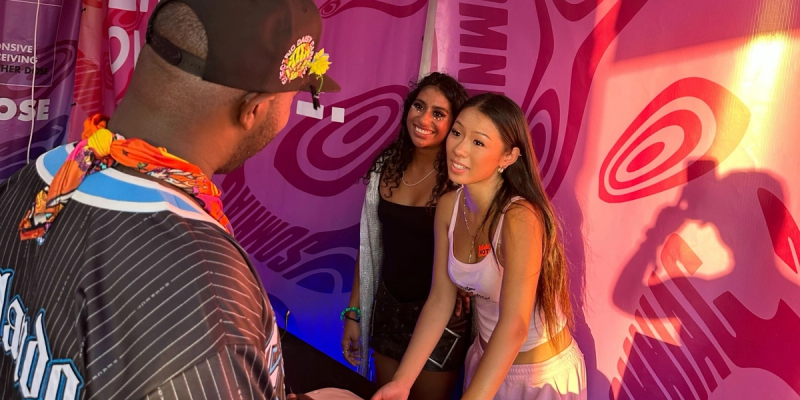
End Overdose is made possible by hundreds of volunteers working tirelessly across the country. Some of them are training attendees at national festivals on how to respond to an overdose, while others are packing naloxone kits in our office well into the evening hours. We want to shine a light on the people whose efforts make our resources free and accessible to all, so we’re excited to share our Volunteer of the Week: Joy Yang!
"Joy Yang is a dedicated volunteer. As the Co-Media Lead for our USF chapter, she has done incredible work developing assets and posts to amplify End Overdose's mission to her peers," says Chapter & Operations Coordinator Olive Younts. "Not only is she making a difference in her chapter, but she is also dedicated to helping the entire organization by creating assets to share with all 68 chapters nationwide. Her passion for the cause comes from her dedication to helping others and breaking the stigma."
Joy's story & inspiration to join End Overdose
I am a second year B.S./M.D. student at the University of South Florida in Tampa, FL. Growing up in Pennsylvania, I saw how substance use disorders can silently and rapidly change and take the lives of many young people; moreover, access to support, resources, and recovery are often riddled with barriers. I recognized how much of humanitarian support and outreach is contingent on "deservedness:" and how somebody's perceived merit is scrutinized far more than support is offered. Too often, marginalized populations such as people struggling with addiction are dismissed as undeserving of aid.
In my first year of university, I authored and presented a poster titled "The Impact of Fentanyl and Xylazine on Respiratory Physiology" at research conferences; my goal was to not only bring awareness to the history and current state of the US opioid crisis, but how new adulterants such as xylazine (a non-opioid which effects cannot be fully reversed by naloxone) synergize with opioids to potentiate lethality. Shortly after my first presentation, I discovered the newly-founded End Overdose chapter at USF, and its mission to educate and distribute preventative and responsive measures related to opioid overdose. To me, this organization represented hope and resilience in the face of many young adults' challenges. A few months later, I became the co-media lead for End Overdose USF.
Making overdose prevention and response education accessible at USF
While research presentations are crucial for contributing to the advancement of medical knowledge, in my role as media lead I learned to also create and share culturally relevant and informational content to expand outreach to my peers. Apart from training people on how to use naloxone, I aim to bring awareness to the stigmatizing language surrounding overdose prevention and substance use disorders. As an aspiring physician, I hope to inspire people to replace fear and biases with the empathy to objectively understand addiction: it is a chronic but treatable brain disease - not laziness, a lack of willpower, or a moral failure. Through this understanding, the personification and humanity of those struggling with substance use disorders transcends the health conditions they battle.
To other college students, I hope that End Overdose USF can be a reflection of safety, community, and hope, as it was for myself. With that goal, I connected End Overdose USF with USF's Center for Student Wellbeing. Our goal is a collaboration where people who access overdose prevention and response resources through our organization can also be connected to campus support and recovery resources. Through the use of infographics, pamphlets, as well as media design, we work to mitigate barriers to access at USF.
American scientist Isaac Asimov once said, “There is an art to science, and a science in art; the two are not enemies, but different aspects of the whole.” Inside and outside of the classroom, I strive to reflect this truth daily through service, connection, and advocacy. The synergy between graphic design and my pursuit of scientific knowledge is how I develop culturally relevant educational resources. I hope the simplicity of my cross-cultural designs that bridge science and art can impact the lives of those I reach, no matter their health literacy, language, or existing barriers to access. As I mature in my academic professional development, I strive to continue to apply knowledge with ingenuity, so as to combat inequity. After all, the art of medicine is a trade, a lifelong craft, that rests delicately on compassion and innovation.
Joy's favorite memory of volunteering with End Overdose
My favorite memory of volunteering with End Overdose was this past month at Warped Tour Orlando 2025. As I was tabling and training festival goers on how to recognize and respond to opioid overdose, a woman came up to me to thank me for End Overdose's mission and impact. From her bag, she pulled out printed pictures of her son, who had tragically passed away from opioid overdose over a decade ago. As she shared her story with me, I was reminded of End Overdose's vision: a world in which "no life is lost to overdose and everyone has the chance to access overdose education, prevention, and response resources." It is stories like hers that inspire me to continue sharing and supporting the philosophy of overdose prevention and response.