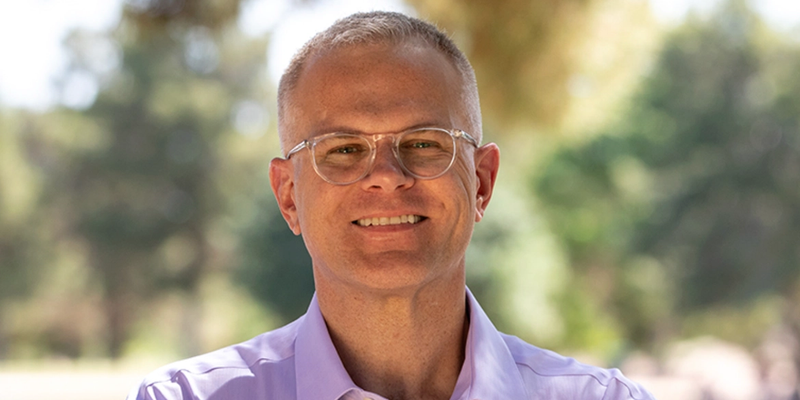
For those at the center of addiction recovery and overdose response efforts throughout the United States, Ryan Hampton is a name you’re likely very familiar with. A bestselling author, representative of victims in the Purdue Pharma opioid settlement litigation, founder of the nonprofit Mobilize Recovery, and longstanding End Overdose board member, he’s made a tangible impact on countless residents throughout the country while carrying his own lived experience. Hampton is a prime example of championing the perspectives and needs of those with substance use disorder, and in turn, saving real lives.
In February of 2026, Hampton was recognized as a catalyst by TIME Magazine for their TIME100 Health list. Spotlighting innovators and trailblazers across the globe, it’s a comprehensive collection of those affecting genuine change within the health space, so Hampton’s addition makes perfect sense. Even as he’s selected for a sizable honor, though, Hampton and his organization Mobilize Recovery are quick to make a salient point: “While the recognition is individual, the work behind it has never been about one person.”
Shortly after his TIME100 Health spotlight, we sat down for a candid discussion with Hampton about his own experience within the opioid crisis that eventually led to his unflinching advocacy, what inspired him to found his national nonprofit Mobilize Recovery alongside its sustained and successful evolution, the importance of sitting on End Overdose’s board, and what being on the TIME100 list means not only for him, but Mobilize Recovery and the recovery movement as a whole.
Can you speak to the personal experiences that led to your fervor for addiction recovery advocacy?
In the early 2000s, I had an up-and-coming career working in public services, but after a hiking injury in 2003, I was prescribed OxyContin and eventually fell into a decade-long opioid and heroin addiction. I lost everything, ended up homeless in California, and experienced the profound failures of the traditional treatment system firsthand. When I finally found long-term recovery in 2015, I realized that my survival was an exception in a system where far too many people were dying. The shame surrounding addiction kept me silent at first, but losing my roommate Nick to an overdose pushed me to start speaking out. I realized that remaining silent was costing lives, and I needed to use my experience to fight for a more humane response to this crisis.
How would you describe the process of representing other victims in the Purdue Pharma settlement fund lawsuit?
Serving as the co-chair of the unsecured creditors' committee for the Purdue Pharma bankruptcy was one of the most eye-opening and frustrating experiences of my life. I went in believing we could expose the Sackler family's corporate misconduct and secure real, tangible justice for the people harmed by OxyContin. Instead, I had a front-row seat to a deeply broken bankruptcy system that prioritized corporate protection over human lives. We were forced to navigate closed-door meetings where victims were consistently put at a disadvantage, ultimately receiving only a tiny fraction of the overall settlement. It felt like a massive money grab by well-funded institutions, while the families who actually paid for funerals or treatment were left fighting for an insulting sum.
What was it like being at the center of seeking justice for countless lives destroyed by prescription opioids?
It carried a tremendous emotional weight, especially knowing that I was one of only four victims appointed to represent roughly 130,000 claimants. Every day, I was acutely aware that I was fighting for families who had lost their children, siblings, and parents to an entirely preventable epidemic. To witness the legal loopholes being used to shield billionaires from true accountability was devastating, but it also fueled my determination to document exactly what happened behind closed doors. That experience solidified my belief that true justice won't come from the courts alone. It requires a massive, organized movement of the people most impacted to force systemic change.
What inspired you to take the first step and found Mobilize Recovery?
The inspiration came from recognizing a massive gap in how the overdose crisis was being addressed nationally. After traveling across the country and meeting with incredible grassroots advocates, I saw that the recovery community had the passion but often lacked the organizing infrastructure. We needed a way to bring together people in recovery, their families, and frontline workers to build a unified "constituency of consequence." The goal was to take the isolation out of advocacy and provide people with the training and tools needed to demand better policies. Change only happens when the people most impacted by an issue become organized, visible, and impossible to ignore.
What was your initial guiding principle for the nonprofit?
From day one, our core guiding principle has been to empower others so they can be bigger, better, and more effective than we ever were. We didn't want to just be a top-down organization; we wanted to facilitate peer learning and uplift grassroots leadership. By training advocates and equipping them with resources, we ensure that community-led solutions take root in all fifty states. We operate on the belief that lived experience is our greatest asset in creating lasting power and changing systems. Ultimately, our mission is to turn that lived experience into actionable, life-saving policy.
How would you describe your approach to pushing for legislation and resources around addiction recovery?
My approach is rooted in treating addiction strictly as a public health emergency, rather than a moral failing or criminal justice issue. I focus on crossing the political spectrum to build inclusive coalitions, finding common-sense solutions that both Democrats and Republicans can support. It’s about demanding actionable outcomes....like the widespread distribution of naloxone, securing funding for sober housing, and holding treatment centers to enforceable national standards. We organize loud, visible campaigns that center the voices of victims and people in recovery, ensuring policymakers have to look us in the eye. It’s a mix of strategic organizing, grassroots mobilization, and an uncompromising demand for accountability.
How has your approach evolved since founding Mobilize Recovery?
When we first started, much of our energy was focused purely on breaking the silence and getting people to share their recovery stories publicly to shatter stigma. Over the years, that approach has matured into highly strategic civic engagement and tangible public health interventions. For example, we launched the Overdose Response Initiative, which has distributed hundreds of thousands of free doses of naloxone across the country. I've also learned that we can't just fight against bad policies; we have to actively design and push for the comprehensive systems of care we actually want to see. Our movement has grown from raising awareness to actively shifting political power and reversing billions of dollars in funding cuts.
Congratulations on being selected for the TIME100 Health spotlight! What does this recognition mean to you, both personally and professionally?
Personally, it is deeply humbling, especially when I think back to the days when I was struggling on the streets of Los Angeles, feeling entirely hopeless. Professionally, I view this recognition not as an individual award, but as a massive validation of the entire recovery advocacy movement. It highlights the collective impact of the Mobilize Recovery team, our grassroots leaders, and the millions of people who are demanding better care and accountability. It proves that issues like addiction and overdose are finally being recognized as central to the future of global health. This moment belongs to every advocate who has turned their lived experience into lasting power to save lives.
Can you speak to the importance of being on End Overdose’s board?
Serving on the board of End Overdose aligns perfectly with my commitment to immediate, life-saving interventions. End Overdose’s mission to combat drug-related deaths through direct education and medical intervention, particularly among younger demographics, is exactly the kind of precision work we need right now. By focusing on providing tangible tools like fentanyl test strips and naloxone directly to communities and universities, the organization bridges the gap between high-level policy and on-the-ground reality. It allows me to help guide a tech-savvy, highly engaged initiative that reaches young people exactly where they are. Being part of this board is about ensuring that we are stopping preventable deaths today, not tomorrow.
Why is it key to focus on overdose prevention and response resources alongside recovery resources?
Put simply, you cannot recover if you are dead. The current fentanyl crisis moves much faster than our traditional treatment infrastructure, making immediate harm reduction tools an absolute necessity. Distributing naloxone and fentanyl test strips gives people the chance to survive long enough to find their own pathway to recovery. If we only focus on long-term recovery without addressing the immediate threat of fatal overdoses, we are abandoning people in their most vulnerable moments. Both strategies must work in tandem: prevention keeps people breathing, while recovery resources give them a life worth living.
What do you hope to see for the future of Mobilize Recovery and recovery advocacy as a whole?
I want to see our constituency of consequence become so powerful that no politician or corporation can ever ignore or exploit the recovery community again. For Mobilize Recovery, the goal is to continue expanding our grassroots training so that every local community has fiercely equipped leaders fighting for their specific needs. Nationally, I hope to see the implementation of enforceable, professional standards for addiction treatment and a drastic increase in accessible, community-based care. We need to permanently shift the culture so that funding for mental health and addiction actually matches the scale of the crisis. Ultimately, I want to see an end to the preventable deaths that have devastated too many families.
Is there anything else you’d like to add?
I just want to emphasize that this fight is a marathon, and it requires all of us working together as problem solvers, not just advocates. Being an author and organizer in this space has shown me the incredible resilience of the human spirit. When I’m not traveling or deep in policy work, I'm grateful to just be home in Las Vegas, spending quiet time with my husband Sean and our boxer dogs, Quincy and Alfie. Those moments remind me of exactly what is at stake and why recovery is so beautiful. If you are out there struggling, please know that your life has immense value, and there is an entire community fighting for you.
 store
store  Garden
  narcat world
  University