 store
store  Garden
  narcat world
  University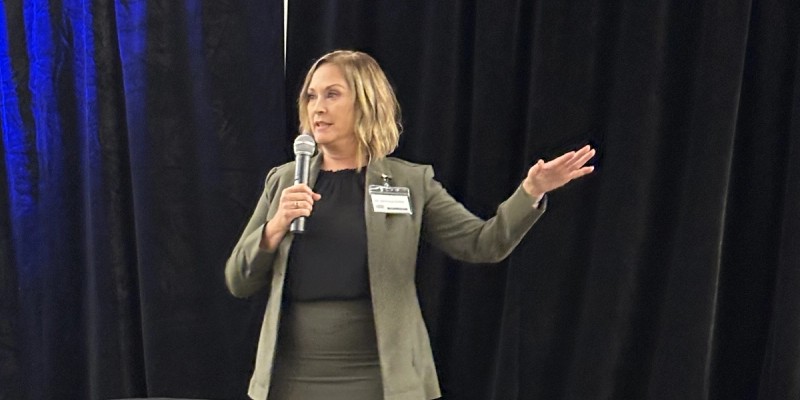
While End Overdose is a national nonprofit, our roots are in Southern California where we’ve been able to see the impact of community members and public health institutions firsthand. One of the institutions doing vital work in the region is the Orange County Health Care Agency (OC HCA) – led by its director Dr. Veronica Kelley.
Since beginning her work with the OC HCA as its Service Chief in 1999, departing in 2009 to ascend the ranks of the San Bernardino County Behavioral Health agency across 13 impactful years, then returning to the OC HCA and becoming its Director in 2024, Dr. Kelley has had a prolific career laser-focused on the care of residents in the counties she’s served.
End Overdose is especially grateful for Dr. Kelley’s work as she’s been at the forefront of expanding naloxone accessibility and education in Orange County to tackle the opioid overdose crisis head on. To understand her work in overdose prevention and response alongside the broader initiatives of the OC HCA that address the full scope of public health crises, we spoke with Dr. Kelley about her journey from Service Chief to Director, her personal experience with family members experiencing SUD, and much more.
Can you tell us about your background in social work? What initially inspired you to pursue master’s and doctorate degrees?
Family trauma including addiction probably influenced me to be a helper and social work was the right field for me to do that. All of my siblings and my dad lived with addictions - so I have a lot of lived experience as a family member. My BA is in Psychology which helped me determine that clinical work, looking at systems that impact an individual would be a better fit for me then just focusing on psychopathology.
How would you describe your journey from first starting in the OC HCA in 1999 to the present?
It’s been quite a ride! I started out as a Service Chief. I started a new program in Behavioral Health Services called Cultural Competency & Multiethnic Services. State and federal mandates required more inclusive behavioral health practices. I have lived experience in this area as well, having a Filipina mom and an Irish American dad - I wasn't born here (but was born on a military base) - but understood the importance of culture in providing healthcare. After 10 years, I left and went to San Bernardino County as their Department of Behavioral Health Cultural Competency Officer and then promoted up to the Director in 2016 after leading our recovery response to the December 2 Terrorist Attack.
In 2021 I decided 13 years was enough time to commute 71 miles one way. :) So I took a position as Behavioral Health Director back at the Health Care Agency where I had started. It was much different then when I left, not in a positive way - and was really suffering from a lack of clear leadership. I made many changes to binding Behavioral Health to the present standards of care, including focusing on SUD and harm reduction collaborations as well as supporting staff with lived experience and of course addressing our fentanyl ODs. As the mom of a daughter with an Opioid Use Disorder, I know first hand how important Narcan is - having reversed her overdose at home. I was appointed the HCA Director last March and am excited by where we are going - although the chairs of the times are a challenge, I am focused on elevating all the amazing work HCA does in Correctional Health, Public Health, Behavioral Health and Specialized Medical Services.
What is the overarching mission of the OC Health Care Agency?
Quality Health for all. We address environmental health from ensuring food served in restaurants and purchased at food trucks is safe, that our environment is safe from communicable diseases and hazardous materials, providing nursing services in home and community, providing specialized laboratory testing including water quality testing for assessing, investigating and analyzing infectious diseases. We operate a Bioterrorism LevelB Laboratory as part of the CDCs LAboratory Response Network for Bioterrorism, and of course provide clinical services like immunizations, testing and care for STIs and HIV, as well as operate pulmonary disease services for TB.
We provide specialty behavioral health services for Medi-Cal recipients as well as those without funding and offer a full continuum of care for all ages living with a serious mental illness, a serious emotional disturbance and or a substance use disorder. We partner with our superior courts in collaborative courts and address all incompetent to stand trial proceedings . We ensure the health care for adults in our county correctional facilities, as well as for youth in our probation residential facilities, and at Orangewood Children & Family Center. We provide services for California Children's Services serving children with significant health impacts, oversee Emergency Medical Services as Orange County Local Emergency Medical Services Authority (LEMSA), provide the Medical Safety Net for the County and oversee the Public Guardians office.
What lessons have you learned while directing the OC HCA? And what excites you most about your agency’s work?
I've learned we need to partner and collaborate if we want to have quality health in this county. We partner with all who are willing, from law enforcement to schools, universities, hospitals, providers and residents. If we really want a healthier OC, then we all have to work together to make it happen - and leverage our resources to do so. I'm excited by the amazing, mission driven workforce we have - people who can easily get paid more and do less in other areas, like the private space - but they stay here because the work is important and meaningful. And challenging times like the ones we are in now, make out work that more important
You’ve been at the forefront of overdose prevention and response efforts in Orange County. What have you found to be the most effective method(s) in addressing the overdose crisis?
Sharing stories - we all know someone who has been touched by an overdose. It doesn't just happen to certain people - it can impact all of us. I share my daughter's story as a reminder that NO ONE is immune from the effects of overdose. And NO ONE deserves to die of the disease of addiction or an overdose. We can all prevent that!
Are there any other potential public health challenges on the horizon that the OC HCA is anticipating (i.e. the entry of xylazine into drug supplies)?
Looking at Nitrous Oxide and its impact on our communities as well as Kratom - we haven't seen much of Xylazine - but we have educated our medical providers so that if they see it in an ED they will treat it appropriately.
What gaps can we continue to fill in the opioid overdoses crisis with the support of public health agencies like the OC HCA?
Any and all support as we move into unchartered waiters at the federal level and as resources and stigma are being leveraged for politics - we all have to work together to ensure harm reduction remains a viable life saving service in addition to treatment - and that we can save our funding - which has never been sufficient - but when the Presidential Executive Orders talk about institutionalizing unhoused people with addiction - using current funding - it’s alarming. We need all the help we can get.
What do you envision for the future of public health in Orange County?
I envision stakeholders working together to ensure health for our community - leveraging whatever resources and knowledge we have - really leaning in on activism to get the word out about actual health science and not misinformation. We need to modernize how we share information and with whom - the days of press releases are gone - and trusted community members, like harm reduction, street level, people in recovery are great examples of leveraging their trusted relationships to advance the health of all.