 store
store  Garden
  narcat world
  University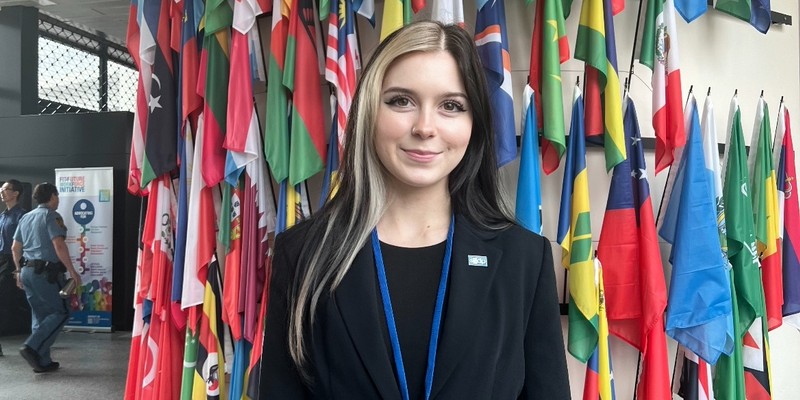
Advisors are a crucial aspect of the End Overdose ecosystem as they generously provide their expertise – whether it’s in entertainment, medicine, or social media – when we need it most. Thus, we’re thrilled to announce translational neuroscientist Brooke Sanders, MS, is joining our advisory committee as our neuroscience advisor.
Brooke is no stranger to End Overdose as she founded our first North Carolina chapter at Wake Forest University (where she attained her Master’s of Science in Biomedical Research) and has penned features for our blog, exploring topics like the science behind kratom.
To mark the occasion of Brooke coming on board, we conducted an in-depth conversation that explores her early scientific inspirations, her extensive research on the effects of cannabis use on the brain, and her passion for making science accessible to all.
Can you tell us about your background and story?
While my research journey began six years ago, I like to say that I have been a scientist for my entire life. I grew up peering over the bench of the father’s chemistry laboratory, fascinated by the equipment and reactions. When I was finally old enough to run my own experiments, I discovered how creative and exciting science could be. Through the exploration of various scientific specialties, I found myself most drawn to neuroscience. The field’s combination of behavior, philosophy, biology, and chemistry creates the ideal arena for a curious mind. Specifically, I became interested in how the brain interacts with the world, and how drugs could modulate preexisting biological systems.
After the sudden passing of a close friend during my first year of college, I gained a new perspective on drug research. I became more interested in the bidirectional relationship between drugs and humans, now understanding that it is important to also view how humans interact with drugs. My mission became clear: to understand how human behavior can somehow mysteriously alter the pharmacological impacts of drugs in the brain.
Can you walk us through your academic background? What inspired you to pursue your Master’s of Science at Wake Forest?
Before beginning college, I knew that I was curious about the brain and behavior, and how drugs can influence their relationship. After conducting over 4 independent research projects during my undergraduate education, I was drawn to explore my interests further by pursuing my Master’s degree. Wake Forest School of Medicine is currently conducting some of the country’s leading cannabis and substance use research. The choice to attend Wake Forest was due to the freedom I was offered to execute my research project of epigenetics in the endocannabinoid system.
Can you explain your work researching the neuropsychiatric and sociological impacts of cannabis? What have been the most exciting aspects of your research?
I began my research journey in 2019 at Syracuse University, double majoring in Neuroscience and Psychology. As the medical and recreational cannabis market grew, I was curious about the behavioral underpinnings of cannabinoid use in clinical populations. My first research project focused on how both psychological and physiological aspects of cannabidiol (CBD) worked in tandem to provide pain relief in patients. These findings emphasized not only the analgesic power of the drug itself, but also of the mind. I then began a secondary project which focused on the social context and motives of cannabis use in adolescents, and how the environment of use could predict outcomes for cannabis use disorder. It became clear that those taking the same drug in different social contexts, could greatly impact safety of use and interpersonal outcomes.
Fascinated by my findings in the cannabinoid field at Syracuse, I began researching the epigenetic side of the endocannabinoid system at Wake Forest School of Medicine. My research aimed to develop a clear link between single nucleotide changes in the brain's endocannabinoid system, as markers for mental health disorders. With this work, I hoped to contribute to the world of cannabis harm reduction, potentially developing clear genetic markers for providers to understand predisposed risk for adverse psychiatric effects of cannabis use. All of my work in the field of cannabis has been in the pursuit of harm reduction. Every individual will experience the same drug differently, because of their unique genetic and psychological profiles, and I believe that it is vital to incorporate that knowledge into our current understanding of medicalized cannabis use.
You’ve also covered the science behind kratom for End Overdose – are there any other substances that you think currently warrant scientific examination?
I believe that every substance deserves scientific examination, especially regarding the therapeutic potential for psychedelic compounds. There are mountains of data showing the therapeutic potential for drugs that are often seen as “dangerous”. Unfortunately, the danger of these substances does not arise from the chemical structure of the drug itself, but rather unregulated markets, lack of accessible information, and underresearched safe use techniques. Many drugs, such as 3,4-methylenedioxymethamphetamine (MDMA) show great therapeutic potential when used in a controlled, therapeutic setting. The future of medicine and mental health care will likely be found in “unconventional” pharmacological agents, as long as the use setting is also considered as a powerful healer.
You’ve talked about wanting to make science accessible for all – why is it important to bridge the gap between professional settings, academia, and the general public?
As a scientist, I view myself as bilingual. I am able to efficiently speak to fellow scientists about the methylation of CNRIP1 via reactive oxidative species and cellular proliferation, yet that sentiment falls upon deaf ears to anyone but the scientist. As a scientist, it is your duty to speak the language of the general public, or else your work bounces around in a Socratic echo chamber. The general public has been deprived of the resources to access and understand scientific discovery, which I am determined to bridge.
What inspired you to become an advisor for End Overdose? How do you hope to translate your medical and academic expertise into the nonprofit’s mission of ending overdose-related deaths?
End Overdose is an organization that emphasizes science-based education, accessibility, and community. All of these values are essential when creating a productive space for overdose prevention efforts. With End Overdose, I hope to provide my insights and experience to help create education that appeals to anyone with any level of scientific knowledge. Through education, awareness, and clarity, we can make strides in ending overdose-related deaths.