 store
store  Garden
  narcat world
  University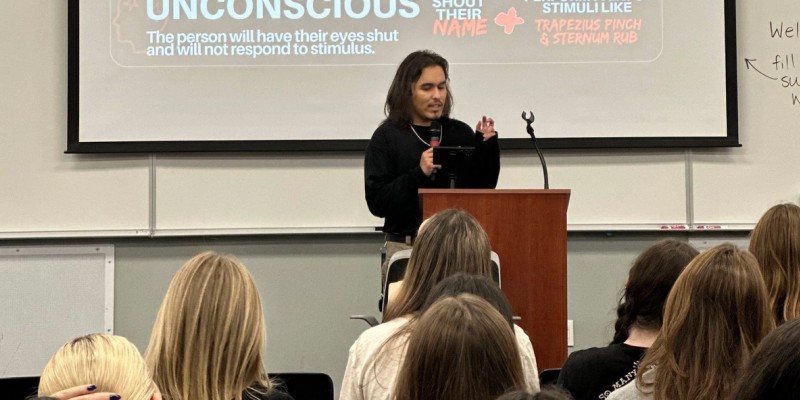
End Overdose's chapter program is vital to our success in equipping young people with lifesaving education and resources. In cities and on college campuses, we trust them to spread the word through a true peer-to-peer model. Our members and volunteers are committing endless hours to End Overdose's cause, so we want to highlight a chapter every week.
Today, we're proud to highlight our UC Irvine chapter! We spoke with Chapter President Leo Vazquez Solis about what inspired him to join End Overdose, the highlights from his work to date, and much more.
What sparked your interest in overdose prevention/response and End Overdose in particular?
My interest in working with overdose prevention stems from my life experiences living within the not so glamorous parts of Southern California. I hated the beliefs and stigmas surrounding addiction, and I have personally witnessed the effects it can have on communities like mine. So, when I attended my first End Overdose meeting here at UCI under our first Chapter President, Anna Khazem, I realized that I could act, which led to my subsequent application to End Overdose as a whole. I love this organization. I have personally lost friends and members of my community to the opioid epidemic, so having the opportunity to lead and manage a club dedicated to the missions of End Overdose is an honor of mine.
Can you describe your experience as the Chapter President?
Wow, I have had such an incredible year so far serving as the Chapter President. The amount of people I have gotten the privilege to meet, the stories I have heard that people do not often tell, and the testimonials from both fellow students and staff letting us know that our work here is critical have been incredibly meaningful. It is a constant reminder that this fight is something worth fighting for. I am a first-generation student and American who was not given the best cards growing up, but I have been able to use both my lived experiences and my education to defy the odds and lead and manage this club with intention. I have built teams, and with the help of my fellow board (shout out Zoe, Andrew, Adriana, Emily, and Aditi), we have been able to solidify our presence at our university, which for me is such an accomplishment. To see people care about overdose prevention, and to see people become more knowledgeable and confident in how to prevent and respond to overdoses using our responsive measures, has been such an incredible experience in and of itself.
What are the major highlights from your chapter’s work to date?
Since the start of the school year, we have really been putting in some work. One of our major highlights was an event in collaboration with the UC Irvine Interfraternity Council, Multicultural Sorority and Fraternity Council, National Pan-Hellenic Council, and UC Irvine Sorority and Fraternity Life during our university Wellness Week. The event had over 300 RSVPs, and we trained and certified more than 166 participants through our long-form training. Throughout the school year, we have hosted over 14 events with organizations ranging from UCIPD staff to Greek life. In total, we have reached nearly 629 individuals across the Irvine and Orange County area and distributed over 416 doses this school year! Shout out to the UC Irvine EO Team!
What do you envision for the future of your chapter?
Irvine can be a rather stale place sometimes, so what I want especially for our chapter is to create a safe space where we can destigmatize certain conversations that people often shy away from, especially when it comes to substance use and addiction. I want our chapter to be a place where people feel comfortable asking questions, learning, and unlearning the harmful beliefs they may have grown up with. A lot of this work is about breaking down fear and replacing it with education, empathy, and action. Moving forward, I hope we continue to grow our presence on campus and within the surrounding community, not just through tabling or training, but by being a consistent, trusted resource people can turn to. I want this chapter to reflect the idea that harm reduction is rooted in care and community, and that having honest, nonjudgmental conversations can quite literally save lives.