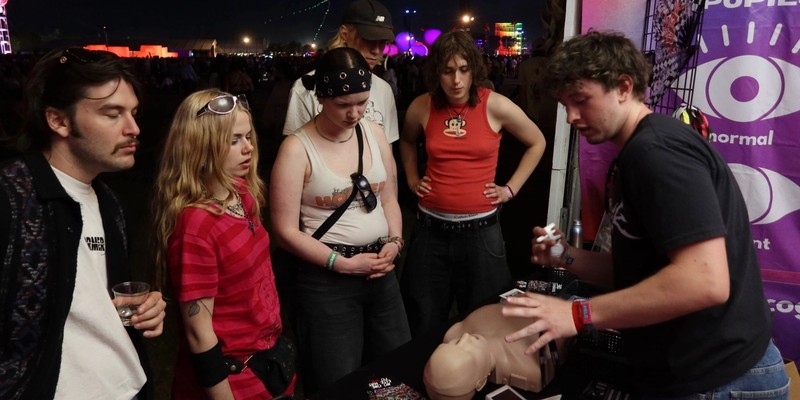
End Overdose's chapter program is vital to our success in equipping young people with lifesaving education and resources. In cities and on college campuses, we trust them to spread the word through a true peer-to-peer model. Our members and volunteers are committing endless hours to End Overdose's cause, whether it's tabling at student events or running booths at concerts across the country, so we want to highlight a chapter every week.
Today, we're proud to highlight our Arizona State chapter! We spoke with president Nolan Smith about what inspired him to get involved with End Overdose, educating people within Greek Life and at music festivals, and his goal to continue training residents beyond the Arizona State campus.
What sparked your interest in overdose prevention/response and End Overdose in particular?
What sparked my interest in the first place was going into the medical field, I was looking for ways to help out that was going to have a lasting effect. I found End Overdose through Instagram and decided that that was the thing I wanted to do. We have a major opioid crisis in America and Arizona, and End Overdose gives people the education and resources necessary in order to save lives.
Can you describe your experience as the chapter president?
Being chapter president has been both challenging and rewarding. I’ve had the opportunity to lead outreach efforts, organize events, and educate others on overdose response.
What are the major highlights from your chapter’s work to date?
Some of our biggest highlights include educating members of Greek life about overdose prevention and response, which helped us reach a large and influential group on campus. We’ve also tabled at events like Decadence, where we were able to connect with a wide audience and distribute naloxone while raising awareness.
What do you envision for the future of your chapter?
In the future, I’d like to expand our outreach beyond campus and into more underserved areas of the community where access to education and naloxone may be limited. I want our chapter to continue growing its impact by partnering with local organizations and increasing the number of people we train and equip to respond to overdoses.
 store
store  Garden
  narcat world
  University