 store
store  Garden
  narcat world
  University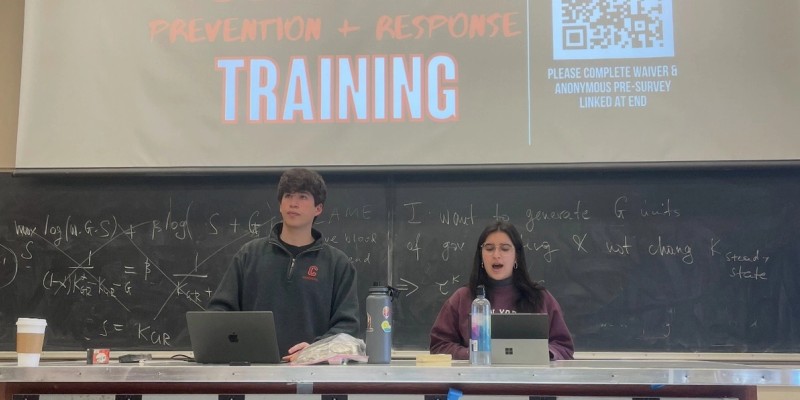
End Overdose's chapter program is vital to our success in equipping young people with lifesaving education and resources. Rather than proselytizing from a soapbox to Gen-Z and Millennials, we trust young people in cities and on college campuses to spread the word through a true peer-to-peer model. Our members and volunteers are committing endless hours to End Overdose's cause, so we want to highlight a chapter every week.
Today, we're proud to highlight our Cornell chapter! We spoke with president Jacob Kaydin about his chapter's strong presence in Greek life, listening to students and their stories, and more!
What sparked your interest in overdose prevention/response and End Overdose in particular?
My passion for overdose prevention stems from personal and community relationships. Many people I know grew up in a world where addiction and substance use were larger-than-life topics. I came to Cornell and noted that opioids, in particular, were a silent topic on campus with little in the way of overdose prevention. End Overdose was the opportunity to make it less quiet, empowering students with knowledge, techniques, and tools to save lives in an instant. I wanted to create an awareness where responding to an overdose was as important as knowing CPR, something all trained students should know how to do.
Can you describe your experience as chapter president of Cornell?
Being the chapter president of Cornell has been challenging yet incredibly rewarding. Our chapter has an especially strong presence within Greek life (as we train many fraternities and sororities), but we've also established a good imprint in all facets of campus, from cultural organizations to athletic clubs; there's no corner we've excluded on campus. As president, I attempt to empower us from within, coordinate efforts, and make it appealing to those who might otherwise shy away from such vital learnings about substance use.
How have you developed authentic connections within the community? By listening first. Whether we've trained Greek chapters, student organizations, or RA training sessions, I've allowed the audience to air their own grievances and questions, helping me frame their stories moving forward. It helps establish trust while normalizing anything concerning substance use; since we've had professors and student leaders and peers involved with End Overdose, we've established a community that makes overdose prevention inclusive instead of isolating.
What’re the major highlights from your chapter’s work to date?
One of the highlights has been our fundraiser last fall, which raised funds for training and naloxone distribution and featured student bands. It brought together Greek life, musicians, and students across the campus in an evening that integrated community, music, and overdose prevention. Our chapter also keeps expanding; we've trained hundreds of students each semester and distributed naloxone far and wide, spreading a ripple effect of preparedness throughout Cornell.
What do you envision for the future of your chapter?
Our vision is to make overdose response training a part of Cornell culture. That is, not just reach the Greek community and student groups but even train professors, teaching assistants, and resident hall advisors. We want every student to know that overdose prevention is a part of community care. In the long run, my vision is that our chapter be a model for how overdose prevention can be incorporated into the life of a university community.
- Jacob Kaydin - President
- Sunni Horton - Vice President
- Maddy Schumann - Fundraising Lead and Media Lead
- Garret Sisler - Administrative Lead
- Jaeuk Shin - Administrative Lead